With the aim of sustainably producing the critical minerals needed for a low carbon future, Canada Nickel is committed to operating in ways that support resilient local communities and minimize our environmental impacts.
Canada Nickel is committed to early, ongoing, and accessible engagement that is specifically tailored to the interests and expectations of all project stakeholders, communities, and Indigenous groups. Canada Nickel intends to manage social, economic, environmental, cultural, and human rights impacts by responding to community concerns, honestly and transparently, while working to directly optimize potential benefits of our projects.
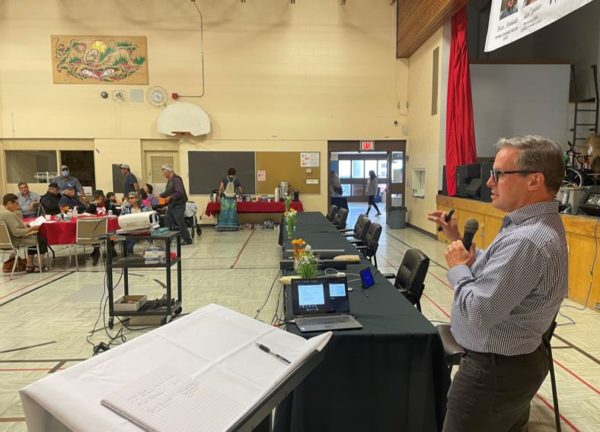
Ongoing dialogue is a key component in ensuring that the Crawford Project is constructed in a way that positively contributes to the future successes of its neighboring communities. Our team will maintain, and seek to continuously improve, ongoing information and participation tools and activities aimed at supporting constructive collaboration throughout the life of the Crawford Project.
SOCIOECONOMIC COMMITTEE
Canada Nickel has formed a Socioeconomic Committee (formerly the Community Contributions and Local Procurement Committee) with social, economic, and municipal representatives from the project’s surrounding communities. The committee’s mandate is to identify and discuss potential social, economic, and health impacts related to the Crawford Project in order to jointly define and implement potential solutions.
Community Contributions and Procurement Committee Charter
Community Contributions and Procurement Committee Meeting Report – January 2022
Community Contributions and Procurement Committee Meeting Report – March 2022
Community Contributions and Procurement Committee Meeting Report – June 2022
Community Contributions and Procurement Committee Meeting Report – November 2022
Socioeconomic Committee Meeting Report – March 2023
ENVIRONMENTAL COMMITTEE
In fall 2022, Canada Nickel formed the Environmental Committee, comprised of dedicated environmental representatives from the region whose objectives are to comment on and review the Crawford Project’s potential environmental impacts and planned mitigation measures, to identify potential gaps in the completed analysis, and to discuss other environmental topics that may arise during the exploration, permitting, and development of the Crawford Nickel Project.
Environmental Committee Charter
Environmental Committee Meeting Report – October 2022
Environmental Committee Meeting Report – March 2023
Environmental Committee Meeting Report – August 2023
Environmental Committee Meeting Report – September 2023
WORKFORCE PLANNING COMMITTEE
Established in 2023, the Workforce Planning Committee brings together regional employment and training experts to discuss Canada Nickel’s labour requirements and plan for community and company actions needed to address gaps and challenges in meeting this demand.
Canada Nickel will be releasing quarterly newsletters to provide updates on the Crawford Project and Canada Nickel’s activity in the community. To subscribe to newsletter releases, please click here
Developed in collaboration with the Community Contributions and Local Procurement Committee, Canada Nickel is pleased to present our official Contributions Program. Please refer to the guidelines for information on eligibility, deadlines, and application processes.
Resources
*Please note, Programs supported by and directly related to an Indigenous community or communities will follow a distinct process, and are encouraged to contact Canada Nickel directly regarding requests for contributions, or to speak with a representative from their community regarding outreach to Canada Nickel.
Canada Nickel will request the feedback throughout exploration, construction, and operation of the Crawford Project to support project permitting and strategic decision-making.
RESOURCES
Summary Booklet of the Crawford Project’s Initial Project Description
Initial Project Description presentation file
Winter 2024 Virtual Open House
ENGAGEMENT TO DATE
Phase One
Canada Nickel conducted a number of meetings which centered around the introduction of Canada Nickel and the Crawford Project, with the intention of gaining a better understanding of community interests, expectations, and concerns. One tool to support this dialogue was distribution of feedback surveys (see the results of our early feedback surveys here).
Phase Two
Focused around sharing of preliminary baseline study results and what could be expected for Canada Nickel’s upcoming engagement activities.
Phase Three
Review and discussion of Canada Nickel’s Initial Project Description for the Crawford Project, including the first of the Crawford Project’s public meetings.
If your organization is interested in acting as a collaborative project stakeholder for future phases of engagement, please contact us.
Should the Impact Assessment Agency of Canada determine that an Impact Assessment is required for the Crawford Nickel Project, Canada Nickel will seek your feedback on our submissions, plans, and proposals throughout the process. To learn more about your role in the new Impact Assessment process, please click here.
See below to access the documents submitted to the Impact Assessment Agency of Canada for Crawford’s Impact Assessment Process, or visit IAAC’s website.
Summary of the Initial Project Description
Detailed Project Description and response to the Summary of Issues
Canada Nickel maintains meaningful communication and collaboration with Indigenous communities and organizations with the objective of establishing mutually beneficial, cooperative, and productive relationships centred around transparent information sharing, tailored engagement, and long-term partnerships.
These relationships are maintained with continuous activities and information sharing, including but not limited to:
Canada Nickel will continue to engage with Indigenous communities and organizations to ensure that the Crawford Project is designed and operated in way that respects their rights, experiences, and connection to their traditional lands.
LOCAL PROCUREMENT POLICY
Working alongside a Community Contributions and Local Procurement Committee, made up of experienced and knowledgeable community members, Canada Nickel has developed a local procurement policy for our exploration and development phase which highlights our commitment to regional spending.
Click here to view Canada Nickel’s Local Procurement Policy.
PLANNING FOR THE FUTURE
Alongside local training and education partners, Canada Nickel has developed an outline of anticipated job opportunities at the Crawford Nickel Project, and the local education and training programs that could help you to obtain, or further, your career in mining.
Click here to view Planning for the Future – Anticipated Career Opportunities
If you are interested in becoming a part of our dynamic and exciting team, please keep a look out for job postings, or send general career inquiries to [email protected].
Canada Nickel is exploring innovative, proactive methods for monitoring, mitigating, and, where possible, counteracting the potential environmental risks associated with our operations. Project development activities will incorporate comprehensive environmental baseline studies, intended to feed into the completion of environmental, social, and economic impact assessments driven by government, community, and Indigenous feedback.
Canada Nickel will share public, summarized project information that transparently addresses environment issues, concerns, questions, and opportunities raised throughout the life of the Crawford Project.
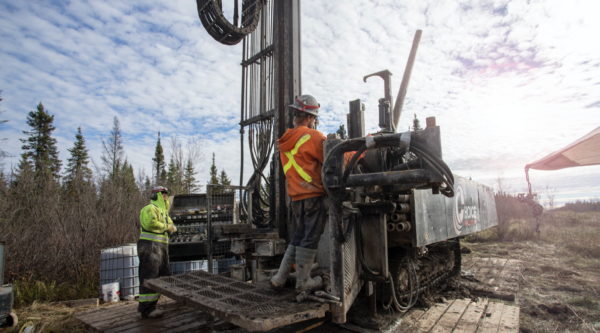
Baseline studies designed to establish an environmental profile of the region are underway. Results from these studies, and information from future investigations, surveys, and mitigation plans, will be shared through impact assessment and environmental documents as they become available.
Engagement activities with local indigenous groups and communities are an opportunity for open, transparent, and productive conversations regarding potential project impacts and cooperative identification of mutually beneficial solutions. Beyond these activities, our team is committed to ongoing and accessible communication that is specifically tailored to your individual interests and expectations. Please refer to the contact information provided below for the different ways you can reach our team, or connect with us through our online feedback submission form and by subscribing to our quarterly community newsletters.
Community Relations Coordinator